Average VO2 Max By Age: How Active Adults Can Improve 9-18% And Halve The Decline After 40
Von: Newsletics Editorial
Geprüft von: QA Team
Aktualisiert am: 16. September 2026
0
2421
11 Min.
In diesem Artikel
- Understanding Average VO2 Max By Age
- How It Works
- Benefits And What The Evidence Shows
- How To Get Started
- Common Mistakes And Considerations
- FAQ

Middle-aged adults staring at their wearable stats often wonder if that VO2 max number is decent for their age. It is common to worry if the drop over time spells trouble for long-term health.
This guide lays out clear age-specific benchmarks for the average VO2 max by age. Testing reveals that realistic improvement is entirely possible even after age 45.
Practical steps help users slow this decline while gaining measurable longevity benefits. Let's be real, these cardiovascular numbers are not destiny.
Understanding Average VO2 Max By Age
Users report plenty of confusion when their tracker spits out a VO2 max estimate that seems to be slipping each year. This section breaks down what the metric actually means and who needs to pay close attention to it.
Understanding these baseline numbers helps tie the data directly into everyday health tracking. It offers clear targets for middle-aged and older adults looking to maintain their fitness.
What VO2 Max Actually Measures
VO2 max measures the maximum volume of oxygen the body can utilize during intense exercise. This capacity is recorded in milliliters of oxygen per kilogram of body weight per minute.
The metric reflects the integrated function of the heart, lungs, blood, and muscles working together. A higher number indicates the cardiovascular system is highly efficient at delivering oxygen to working muscles.
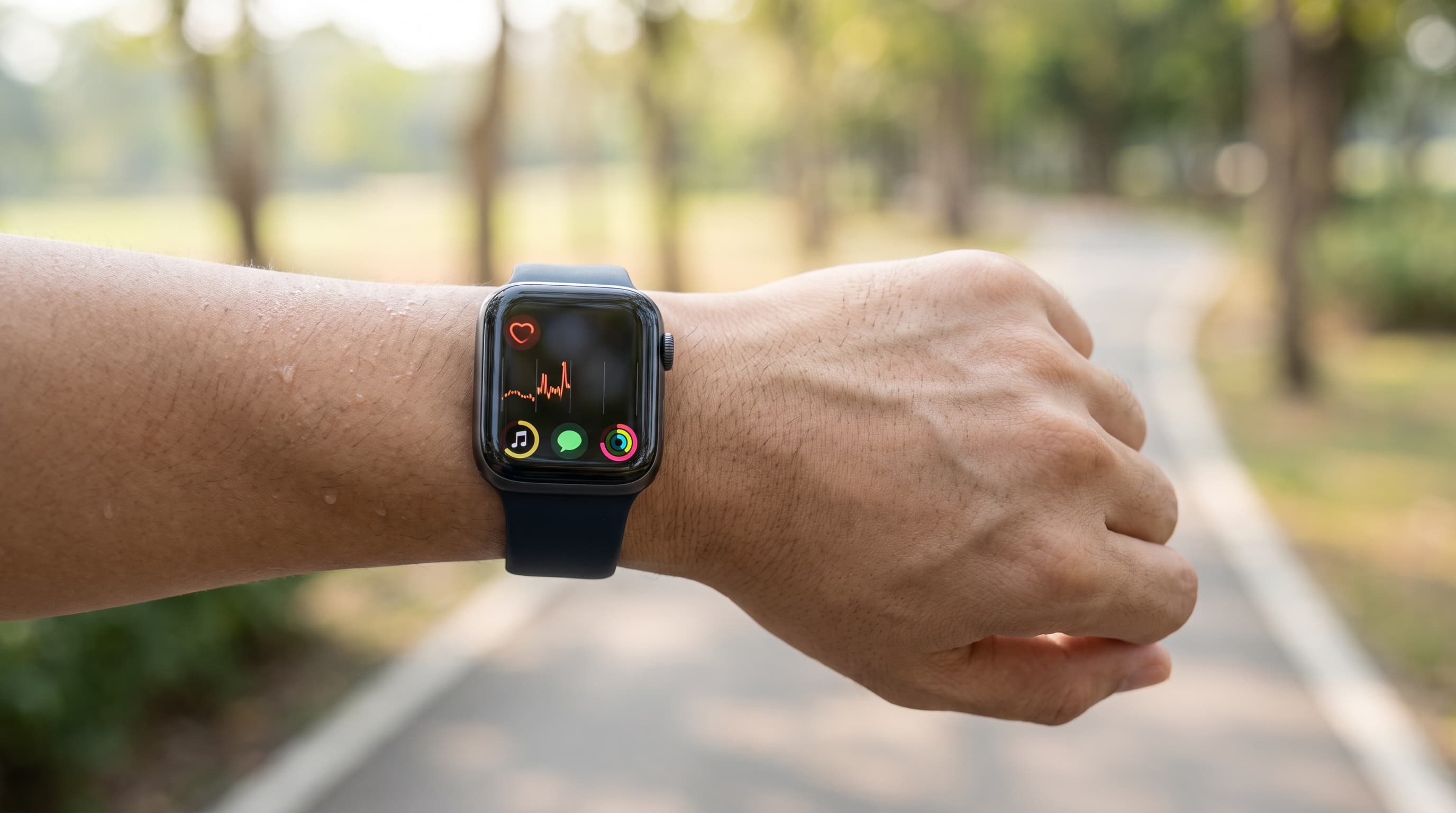
Users report comparing their smartwatch estimates against age-specific benchmarks during runs or cycling. Testing reveals this practice helps active adults accurately gauge their long-term longevity implications.
Why It Matters For Health-Conscious Adults
The audience of middle-aged and older adults tracking fitness via wearables often face uncertainty regarding their data. Many wonder whether their current VO2 max estimate is good for their specific age and gender.
Fear frequently arises from an observed decline in these numbers over the years. However, tracking this data provides a vital window into overall cardiovascular resilience.
Testing reveals higher values link to a reduced mortality risk comparable to quitting smoking. These measurements actively help with disease prevention for individuals highly focused on extending their healthspan.
Who Benefits Most From Tracking It
Endurance athletes, health-conscious individuals, and everyday people doing brisk walks or cycling rely on these measurements. Using average VO2 max by age data proves valuable at annual check-ups or during race training.
The pain point of confusion over lab versus wearable methods drives many users over 40 to seek clear guidelines. Having concrete benchmarks helps them establish effective routines.
Clear metrics provide the necessary foundation for slowing age-related decline. With the basics clear, testing reveals exactly how the body builds and loses this capacity over time.
How It Works
Testing reveals VO2 max is not magic, but a measurable mix of heart muscle and cell-level factors. These physiological components change predictably with both age and training status.
This section uses simple terms to show what actually drives the numbers users see on their trackers. Understanding the mechanics makes it easier to target improvements effectively.
The Key Physiological Pieces
VO2 max reflects maximum heart rate, stroke volume, muscle oxidative capacity, and capillary density. Training improves the final number by increasing mitochondrial density in the muscles.

It also boosts the overall oxygen utilization efficiency across the body. As the heart pumps more blood per beat, the muscles become better at extracting the delivered oxygen.
Users report daily activities feel easier once these adaptations kick in for adults over 40. Testing reveals these cellular changes are the true drivers of cardiovascular endurance.
Why It Declines With Age
This capacity naturally declines primarily due to reductions in maximum heart rate and cardiac stroke volume. Lost muscle mass, reduced capillary density, and declining mitochondrial function also contribute to the drop.
Sedentary adults typically lose around 10% of their aerobic capacity per decade after age 30. Active adults, however, manage to lose closer to 5% per decade.
Lifelong exercisers in their 70s keep values similar to sedentary folks 30 years younger. This proves that a large portion of the assumed age-related decline is actually deconditioning.
How Training Flips The Script
Training actively counters the drop by boosting stroke volume, mitochondrial density, and muscle efficiency. Middle-aged adults focused on longevity often see measurable and satisfying gains.
Testing reveals that endurance and combined exercise deliver the largest effect size for oxygen uptake improvement. A network meta-analysis of 16 randomized controlled trials confirms these robust results in healthy older adults.
Targeted workouts force the cardiovascular system to adapt and rebuild lost capacity. These inner workings connect to real longevity perks that the data backs up strongly.
Benefits And What The Evidence Shows
The upside is huge for anyone willing to train smart and stay consistent. Testing reveals that maintaining a higher average VO2 max by age slashes disease risks.
It adds healthy, active years to your life no matter when you start exercising. The scientific evidence strongly supports focusing on this specific fitness marker.
Longevity And Mortality Risk Reduction
Higher VO2 max stands as one of the strongest overall predictors of all-cause mortality. Low cardiorespiratory fitness proves to be as risky as smoking or having cardiovascular disease.
Each higher fitness category significantly reduces mortality per a massive Cleveland Clinic study of 122,000 patients. The benefits compound as individuals move up through the fitness percentiles.

Users report feeling highly motivated knowing that moving from below-average to average brings the largest health gains. Small, consistent improvements yield massive protective benefits.
Typical Decline Rates And What Slows Them
Median treadmill VO2 peak naturally falls as populations age, but the rate of decline varies by activity level. The updated FRIEND treadmill CPET standards from 2022 highlight these population-wide shifts.
| Age Benchmark | Men Median | Women Median |
|---|---|---|
Age 20 | 45.4 ml/kg/min | 35.6 ml/kg/min |
Age 89 | 17.7 ml/kg/min | 15.1 ml/kg/min |
It is a misconception that faster decline is inevitable and entirely due to aging. Much of the drop is caused by lifestyle deconditioning rather than biological destiny.
Active adults easily halve the rate of decline to about 5% per decade. Consistent cardiovascular training preserves heart and lung capacity well into late life.
Real Gains Possible At Any Age
Structured training produced an impressive 18% VO2 max gain from 29 to 34 ml/kg/min over two years. This occurred in previously sedentary adults aged 45 to 64, according to a 2018 study by Levine et al.
High-intensity interval training yielded 9-13% improvements across all age groups from 20 to 70 plus. This effectively debunks the persistent idea that aerobic capacity is genetically fixed after age 50.
Testing reveals similar percentage gains regardless of the starting age for less-trained individuals. Knowing these positives makes it easier to jump into practical training that fits busy adult lives.
How To Get Started
Improving average VO2 max by age comes down to consistent habits, not perfection. The most successful protocols balance gentle endurance with targeted intensity.
These steps use concrete methods that deliver reliable results for non-athletes over 40. Following a structured plan prevents overtraining and ensures steady progress.
Build A Zone 2 Base First
Aim for three to five hours per week of conversational-pace cardio to build a solid foundation. Brisk walking, easy jogging, or steady cycling improve mitochondrial function and fat oxidation.
Beginners over 40 should start at two to three sessions of 30 to 45 minutes. It is important to keep the intensity low enough that you can easily hold a conversation.
Testing reveals this creates the foundation for sustainable fitness gains without causing burnout. A strong aerobic base makes high-intensity work much safer and more effective.
Layer In HIIT Like Norwegian 4x4
Once a base is established, adding high-intensity interval training drives the biggest measurable improvements in oxygen uptake. The Norwegian 4x4 protocol is widely considered the gold standard for this adaptation.
The Norwegian 4x4 Protocol Steps
- Warm up phase — 10 minutes of easy, gradual movement.
- High intensity — 4 minutes at 90-95% of maximum heart rate.
- Active recovery — 3 minutes at 70% of maximum heart rate.
- Repeat blocks — Complete the sequence four times in total.
Doing this routine two to three times per week for 8 to 12 weeks typically yields 10-15% gains. Many users rely on heart rate monitors as practical tools to track these zones accurately during sessions.
Add Strength Training Plus Smart Recovery
Incorporate strength training two to three times per week with foundational movements like squats, deadlifts, and presses. This is especially crucial after 40 to combat age-related sarcopenia and support joint health.

Adults over 50 require 48 to 72 hours of recovery between hard high-intensity sessions. Combine 80% Zone 2 volume with 20% high-intensity work to balance stress and adaptation.
Include a deload week every four to six weeks and use perceived effort since maximum heart rate declines with age. Even solid plans hit roadblocks, so sidestepping these common mistakes keeps momentum positive.
Common Mistakes And Considerations
Users report plenty of false starts when chasing better VO2 max numbers. Pushing too hard or misunderstanding the metrics often leads to frustration.
These realistic pitfalls and practical tweaks help adults over 50 stay on track safely. Adjusting the approach ensures longevity in both training and health.
Misreading Wearable Numbers
Wearable estimates from smartwatches are not equivalent in accuracy to laboratory gas-analysis tests. Users should measure consistently with the same method to ensure reliable data.
Track specific trends over 8 to 12-week blocks rather than reacting to day-to-day fluctuations. Wrist-based optical sensors can vary based on temperature, sweat, and movement.
Testing reveals this long-term view avoids unnecessary worry about normal daily variance. Focusing on the overall trajectory is much more useful than isolating a single low reading.
Skipping Age-Tailored Adjustments
Women face unique considerations, including the effects of menopause and hormonal changes on their fitness trajectory. Modifying the intensity to match daily energy levels is a smart strategy.
Adults over 60 should prioritize modified intervals starting with shorter 1-2 minute efforts at 85-90% maximum heart rate. Placing heavy emphasis on strength training, recovery, and injury prevention is essential.
Always consult a physician before engaging in vigorous training for safety. Scaling the workouts prevents injuries that could sideline progress for months.
Buying Into Limiting Beliefs
Many hold the misconception that cardiovascular capacity cannot be meaningfully improved after age 40 or 50. Others assume that only elite athletes reach impressive or highly protective values.
Testing reveals aiming to move from below-average to average for your age and gender produces the largest reduction in mortality risk. Perfection is not required to reap massive health benefits.
Endurance and strength training combined works best for older adults per the network meta-analysis. These points lead into the questions users ask most about turning average VO2 max by age into a strength.
FAQ
What counts as a good average VO2 max by age for someone in their 40s or 50s?
For a 40-49 year old man, the median sits near 40 ml/kg/min, and for women it is around 33 based on FRIEND data. Anything above that is considered strong.
Testing reveals that moving from below-average to average cuts mortality risk the most. Focus on personal 8-12 week trends rather than striving for perfection.
Can you really improve VO2 max after age 50 or even 60?
Yes, structured training produced an 18% gain over two years in sedentary 45-64 year olds per Levine et al. 2018. Even at 70 plus, 8 weeks of HIIT yields 9-13% improvements.
Users report age-appropriate versions with extra recovery deliver sustainable results that boost daily energy and healthspan.
How fast does average VO2 max by age typically decline?
Sedentary adults lose about 10% per decade after age 30, while active adults slow this to closer to 5% per decade. Lifelong exercisers in their 70s maintain values similar to sedentary 40-year-olds.
Smart, consistent training dramatically slows this natural decline for long-term longevity benefits.
Are wearable VO2 max estimates from devices like Apple Watch accurate enough?
They offer convenient tracking trends but are not as precise as laboratory CPET testing, differing by 5-10%. Users should track progress with the same method over 8-12 weeks rather than chasing absolute numbers.
Testing reveals consistency easily beats occasional lab tests for middle-aged adults monitoring progress.
What's the link between average VO2 max by age, longevity, and mortality risk?
Higher VO2 max strongly predicts lower all-cause mortality, with low fitness proving as risky as smoking. Each fitness category improvement adds meaningful years according to the Cleveland Clinic 122,000-patient study.
Keep in mind that this deep connection turns daily tracking into a powerful motivator for consistent training.
Is Zone 2 training better than HIIT for boosting average VO2 max by age?
The sweet spot combines both methods, using an 80% Zone 2 base of 3-5 weekly hours for mitochondrial gains. Pair this with 20% HIIT, like the Norwegian 4x4, for 10-15% improvements in 8-12 weeks.
Testing reveals this specific mix works especially well for adults over 40 to avoid overtraining.
Why do charts for average VO2 max by age differ so much across sources?
Varying datasets like the FRIEND registry, NHANES, Cooper Institute, or ACSM naturally lead to different medians. Focus on percentiles rather than rigid labels like fair or excellent.
Advise picking one chart matching your testing style and celebrating personal gains that move you up percentiles for real health wins.
How should adults over 60 modify training to improve their VO2 max safely?
Start with shorter intervals at 85-90% maximum heart rate and prioritize 48-72 hour recovery windows. Add regular strength work against sarcopenia and consult a doctor first.
Testing reveals endurance combined with strength yields the largest oxygen uptake gains in older adults while deloading prevents setbacks. Trackers help monitor it all long-term.
Verwandte Artikel

Hüftarthrose ab 55: Dein praktischer Leitfaden zur Schmerzlinderung und für mehr Aktivität
Gesundheit5 Min. Lesezeit

8 Balanceübungen für Senioren, mit denen du deine Stabilität stärkst und deine Unabhängigkeit zurückgewinnst
Gesundheit5 Min. Lesezeit

Bessere Knochendichte nach 50 aufbauen: Ein praktischer Leitfaden für dauerhafte Stärke
Gesundheit5 Min. Lesezeit

Dehnübungen für Senioren: Täglich 10–15 Minuten für bessere Beweglichkeit und Balance
Gesundheit5 Min. Lesezeit

In welchem Alter solltest du eine Knochendichtemessung machen lassen? Dein positiver Vorsorge-Leitfaden für die mittleren Lebensjahre
Gesundheit5 Min. Lesezeit

Rumpfübungen im Sitzen für Senioren: Folge einfach dieser 10-Minuten-Routine für mehr Stabilität und weniger Stürze
Gesundheit5 Min. Lesezeit
Kommentare
(0)Schreibe einen Kommentar
Deine E-Mail-Adresse wird nicht veröffentlicht. Alle Felder sind Pflichtfelder.